https://youtube.com/shorts/92F4moQDPC0
 Coalition by MSKMRI JEE EUN LEE.pdf
6.67MB
Coalition by MSKMRI JEE EUN LEE.pdf
6.67MB
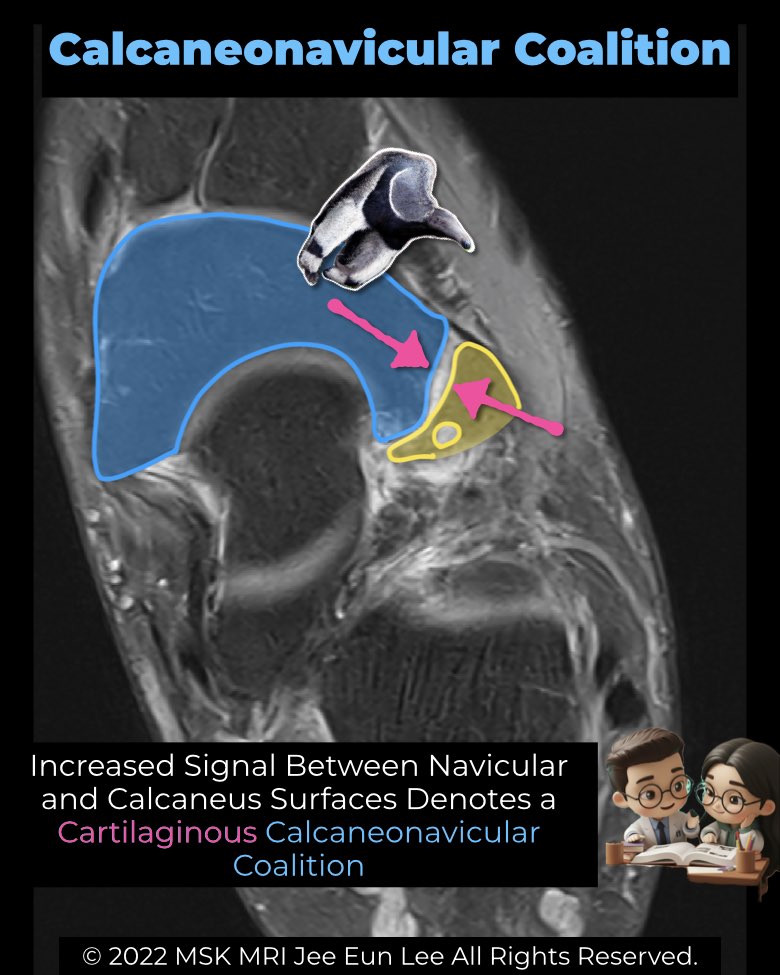
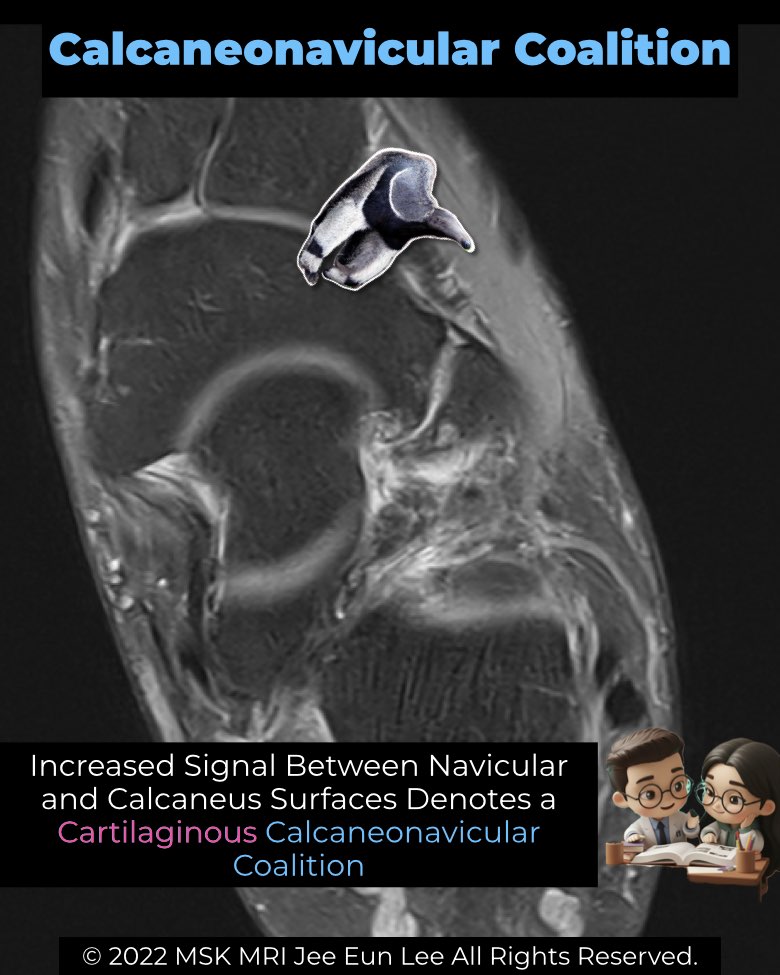
One of the most frequent tarsal coalitions is the calcaneonavicular type. Radiographs may suggest it, but cross-sectional imaging makes the diagnosis clear.
CT Highlights
- Shows the exact bony bar in osseous coalition.
- Non-osseous types → narrow/irregular joint space, subchondral sclerosis, cysts, and hypertrophy.
- Classic signs:
• Anteater nose – elongated anterior calcaneus.
• Reverse anteater – navicular extends laterally/posteriorly. - Strength: Superb for osseous anatomy, surgical mapping.
MRI Highlights
- Osseous: marrow continuity across calcaneus–navicular (T1 bright).
- Cartilaginous: cartilage-like bridge (T1 intermediate, T2 high).
- Fibrous: low-signal band with irregular facets.
- Key clue: bone marrow edema on STIR/T2 FS → symptomatic stress reaction.
- Extras: ganglion cysts, stress reactions, early OA.
- Strength: Superior for non-osseous coalitions & soft tissue.
Radiology Perspective
- CT = best for bone.
- MRI = best for tissue, marrow, and subtle coalitions.
Both are complementary, and recognition of secondary signs is essential for accurate diagnosis.
#Radiology, #MSKMRI, #FootMRI, #CoalitionSigns, #CalcaneonavicularCoalition, #RadiologyEducation, #OrthopedicImaging, #MRIteaching, #RadiologistLife, #MedicalEducation
Visualizing MSK Radiology: A Practical Guide to Radiology Mastery
© 2022 MSK MRI Jee Eun Lee All Rights Reserved.
No unauthorized reproduction, redistribution, or use for AI training.