https://youtube.com/shorts/amLKKqOGU8w

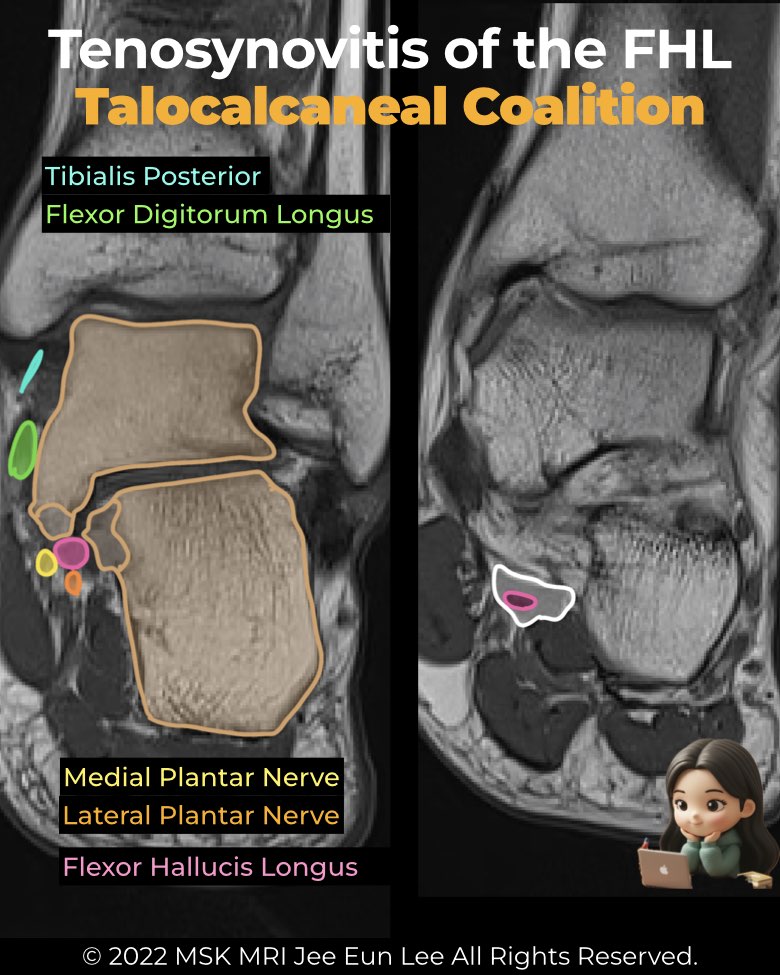
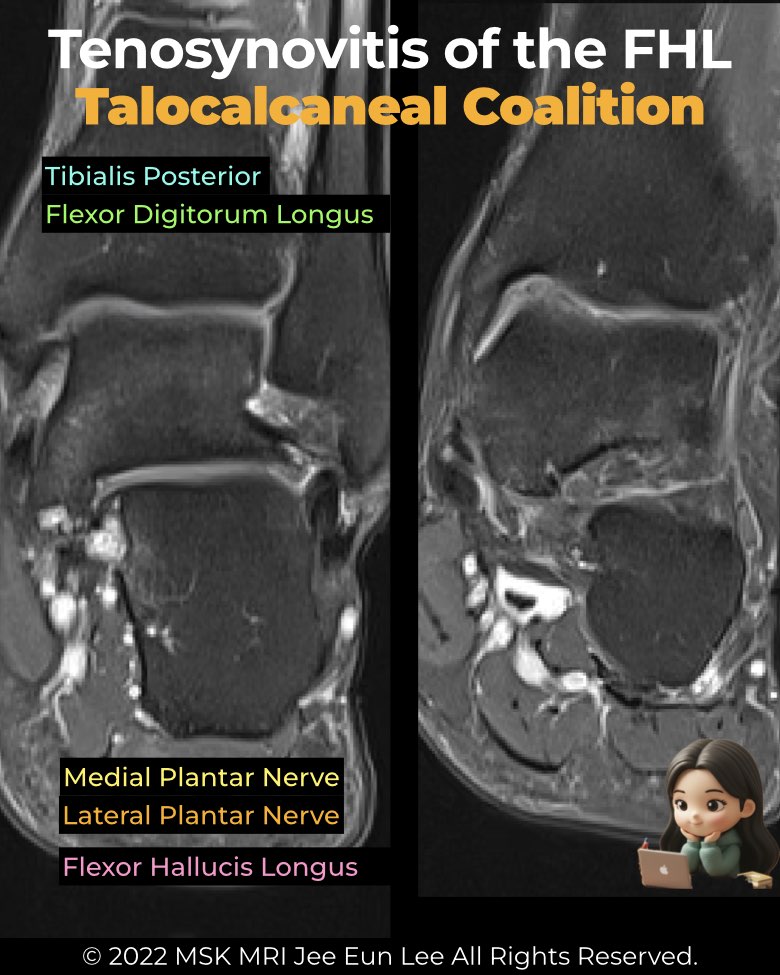
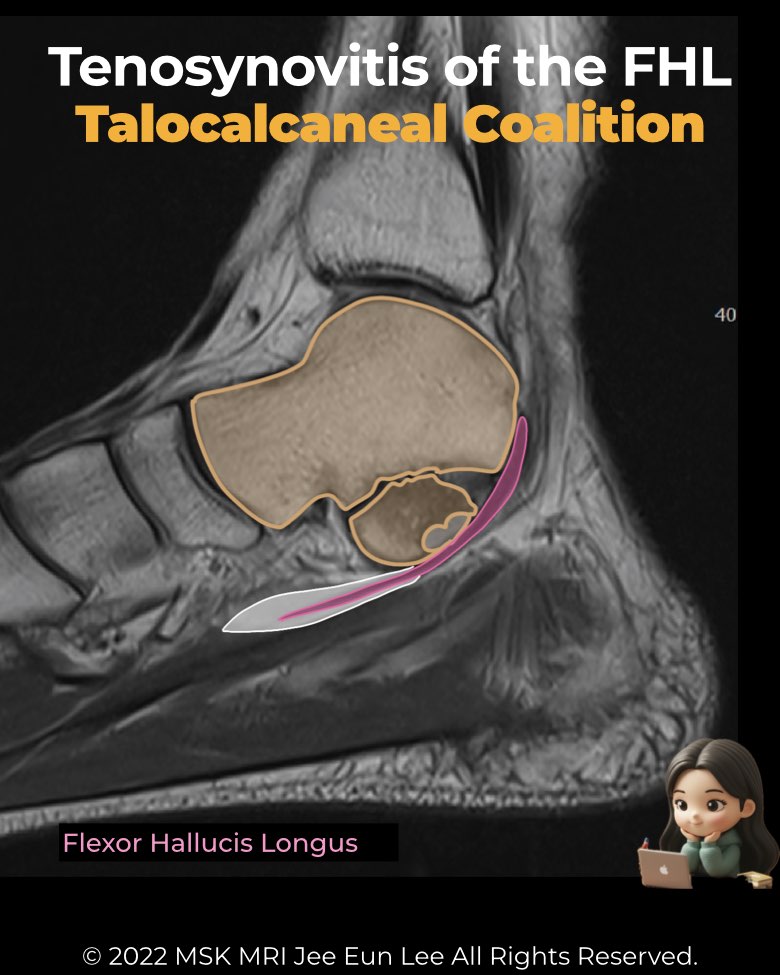
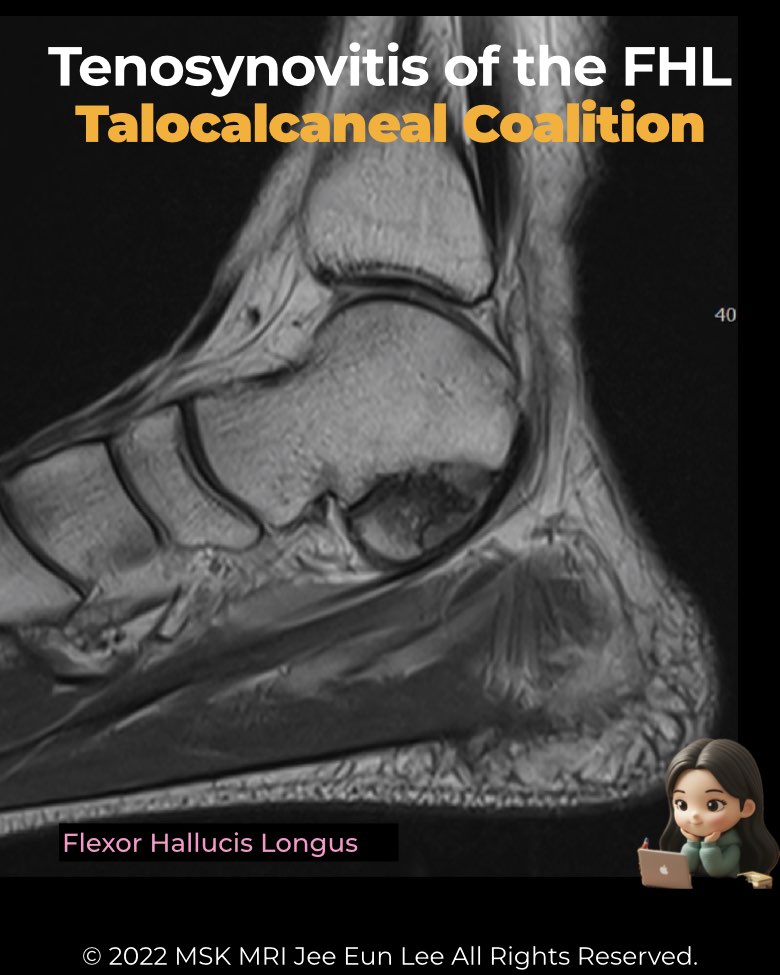
The flexor hallucis longus (FHL) tendon is particularly vulnerable in talocalcaneal coalition (TCC) due to its anatomical course beneath the sustentaculum tali. Non-osseous TCCs often cause bony hypertrophy and hook-like excrescences, distorting the fibro-osseous tunnel. This results in:
- Deepening of the FHL tunnel
- Medial displacement/draping of the tendon
- Increased friction and impingement against bony overgrowth
Chronic irritation leads to tenosynovitis, entrapment, attenuation, and tearing.
MRI Findings (seen in ~39% of TCC cases):
- Tenosynovitis (12%) – excessive sheath fluid, lobulated contour, debris, synechiae
- Entrapment (21%) – tendon wedged into talus–calcaneus cleft or encircled ≥180° by bony excrescences
- Attenuation (21%) – focal thinning due to attrition over posterior bony ridges
- Longitudinal split tear (12%), tendinosis (6%) – advanced attritional damage
Clinical Relevance
- FHL pathology is a major pain generator beyond the coalition itself.
- Preoperative MRI is critical: identifies entrapped/damaged tendon, prevents missed pathology or iatrogenic injury.
- Coalition resection alone may be insufficient—coexisting FHL disease must be addressed for optimal outcomes.
#Radiology #MSKMRI #FootMRI #SubtalarJoint #TalocalcanealCoalition #FHLtendon #OrthopedicImaging #MRIteaching #RadiologistLife #MedicalEducation
Visualizing MSK Radiology: A Practical Guide to Radiology Mastery
© 2022 MSK MRI Jee Eun Lee All Rights Reserved.
No unauthorized reproduction, redistribution, or use for AI training.