https://youtube.com/shorts/PB9tQoQqp40
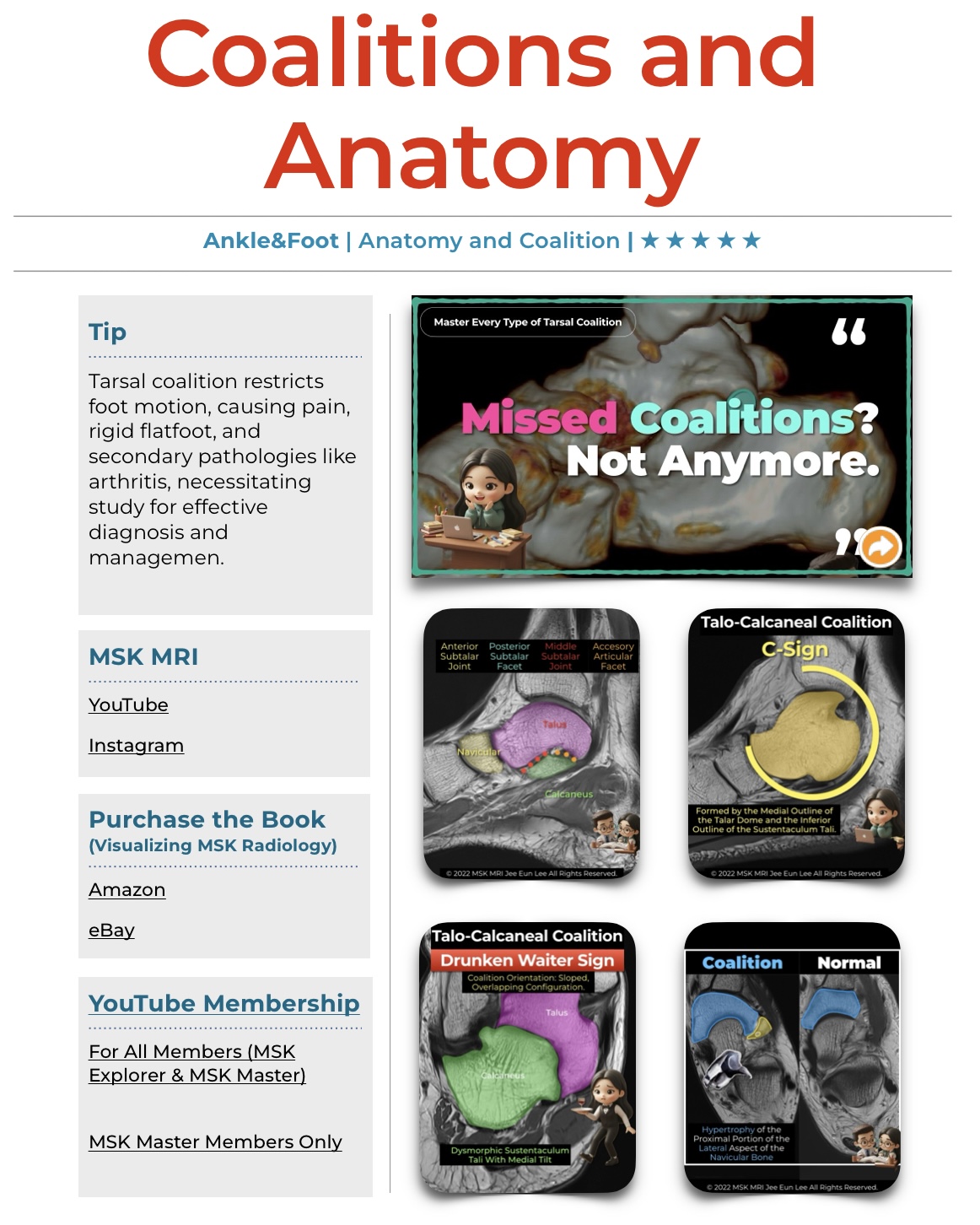 Coalition by MSKMRI JEE EUN LEE.pdf
6.67MB
Coalition by MSKMRI JEE EUN LEE.pdf
6.67MB
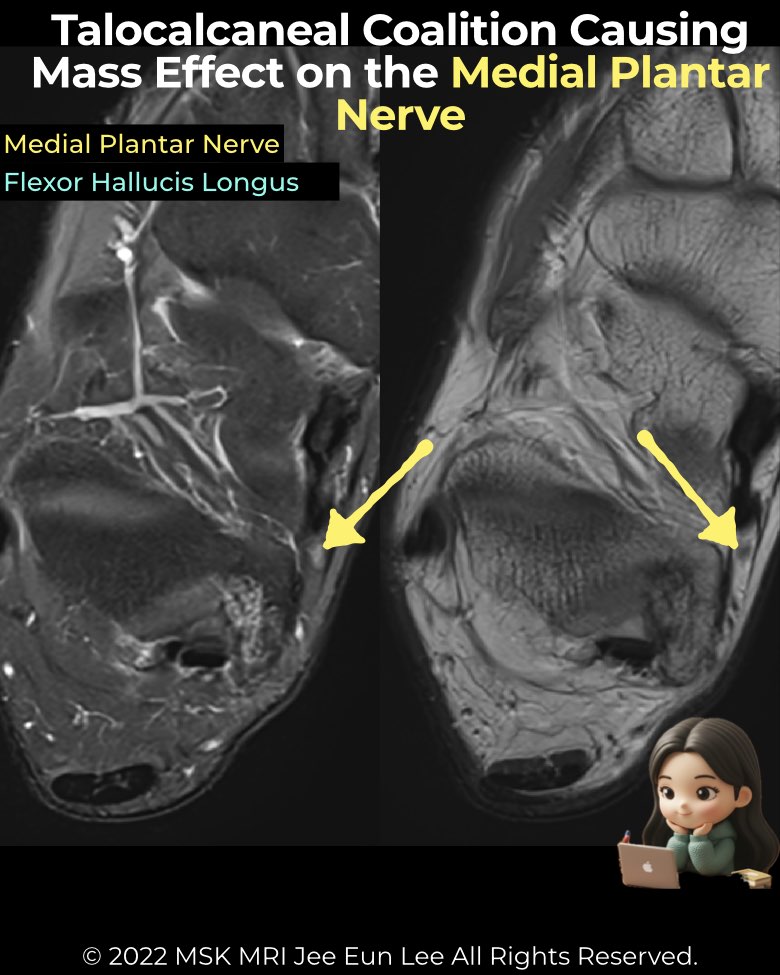
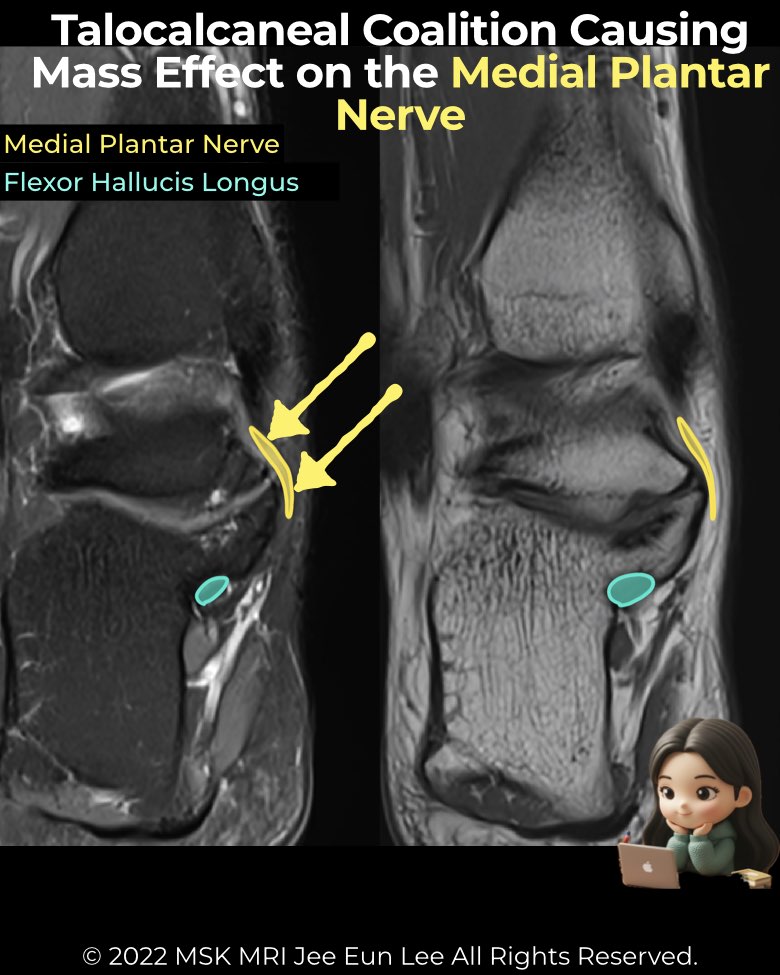
Tarsal coalitions, especially talocalcaneal types, can produce mass effect in the tarsal tunnel, leading to nerve and tendon pathology.
Mechanism
- Bony overgrowth from fibrous/cartilaginous coalitions (often EA-PM or middle facet) protrudes into the tunnel.
- Ganglion cysts may arise from the coalition or tendon sheath and decompress into the tunnel, worsening compression.
- Tendons (FHL, FDL, PT) can be entrapped or attenuated by sharp excrescences of the coalition.
Nerve Involvement
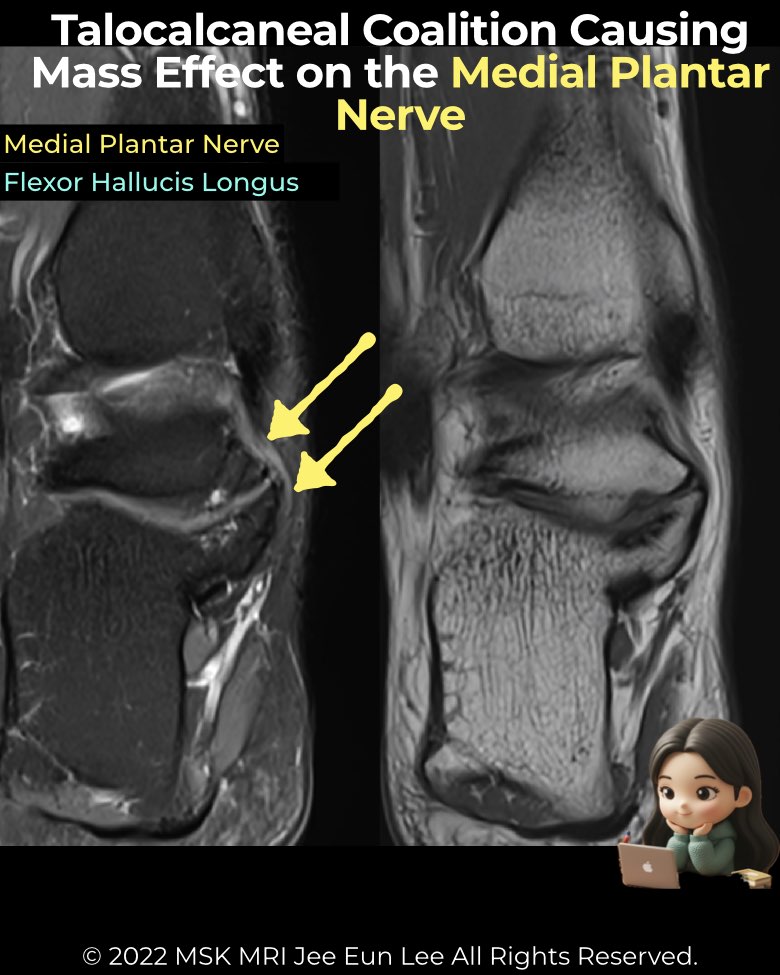
- The medial plantar nerve (MPN) is most frequently affected due to its close course along the medial talus/calcaneus.
- MRI findings of neuritis:
• Focal T2 hyperintensity (equal to or > blood vessels)
• Caliber enlargement
• Direct abutment/displacement by coalition or cyst
• Secondary denervation edema in the abductor hallucis
MRI & Clinical Clues
- MRI is the gold standard: defines coalition type, space-occupying lesion, nerve signal changes, tendon pathology.
- FHL is the tendon most often involved: entrapment, thinning, split tears, tenosynovitis.
- Patients may present with pain, paresthesia, numbness in MPN/LPN distribution and a positive Tinel’s sign.
Surgical Significance
- Simple coalition resection is often insufficient if associated nerve or tendon pathology is not addressed.
- Pre-surgical recognition of neuritis or tendon disease is critical to prevent persistent pain and poor outcomes.
#Radiology #MSKMRI #FootMRI #TalocalcanealCoalition #TarsalTunnelSyndrome #MedialPlantarNerve #FHL #OrthopedicImaging #MRIteaching #RadiologistLife #MedicalEducation
Visualizing MSK Radiology: A Practical Guide to Radiology Mastery
© 2022 MSK MRI Jee Eun Lee All Rights Reserved.
No unauthorized reproduction, redistribution, or use for AI training.