https://youtube.com/shorts/6_vWInc3WDw
Imaging-Based Diagnosis and Radiographs–MRI Correlation
Why This Matters
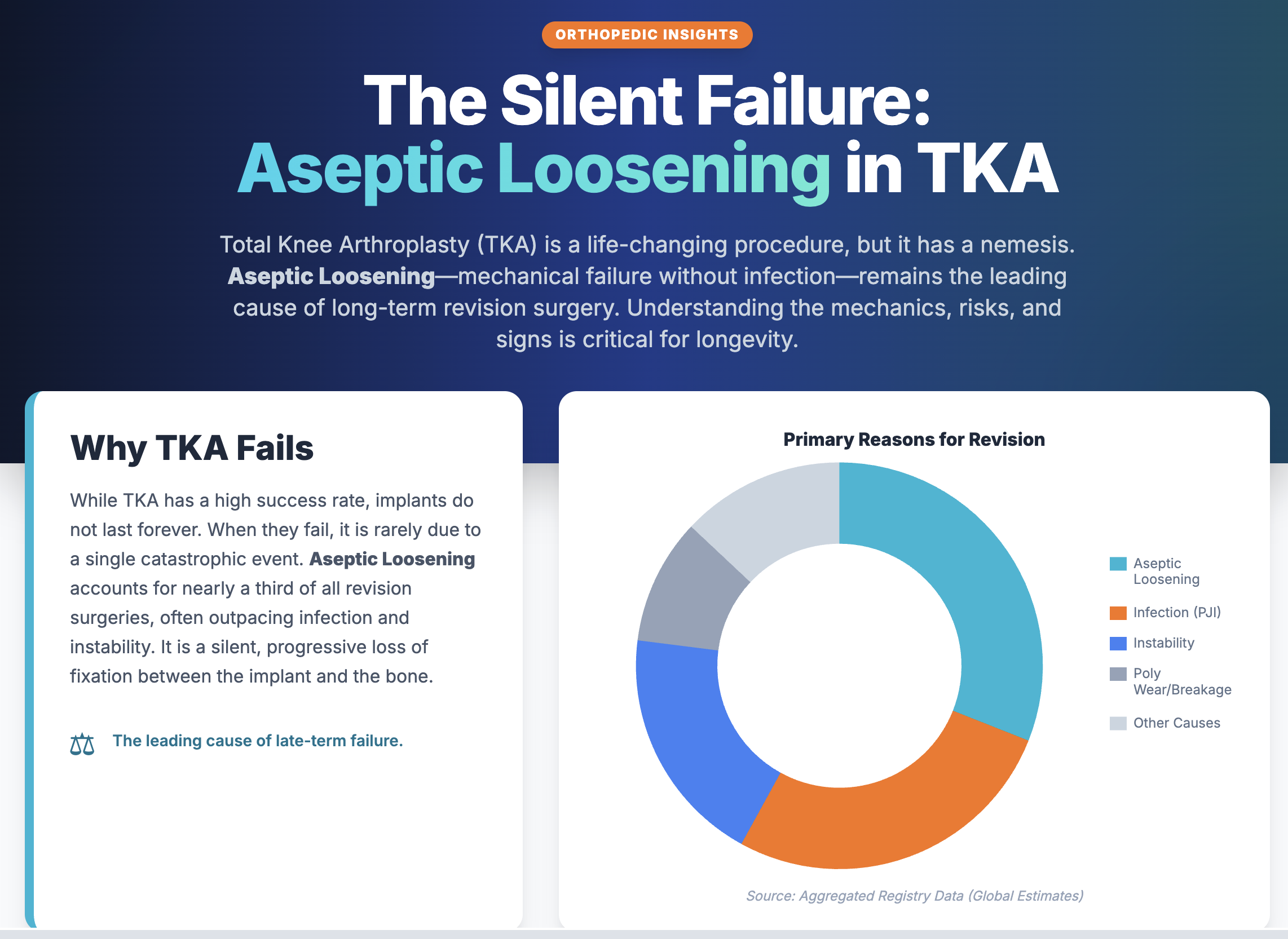
- Most common late cause of revision after total knee arthroplasty (TKA)
- A critical diagnosis in postoperative knee imaging
- Core principle:
Radiographs diagnose loosening.
MRI characterizes the biological response and extent.
Radiographic Findings — Primary Diagnostic Tool
Aseptic loosening is still, first and foremost, a radiographic diagnosis.
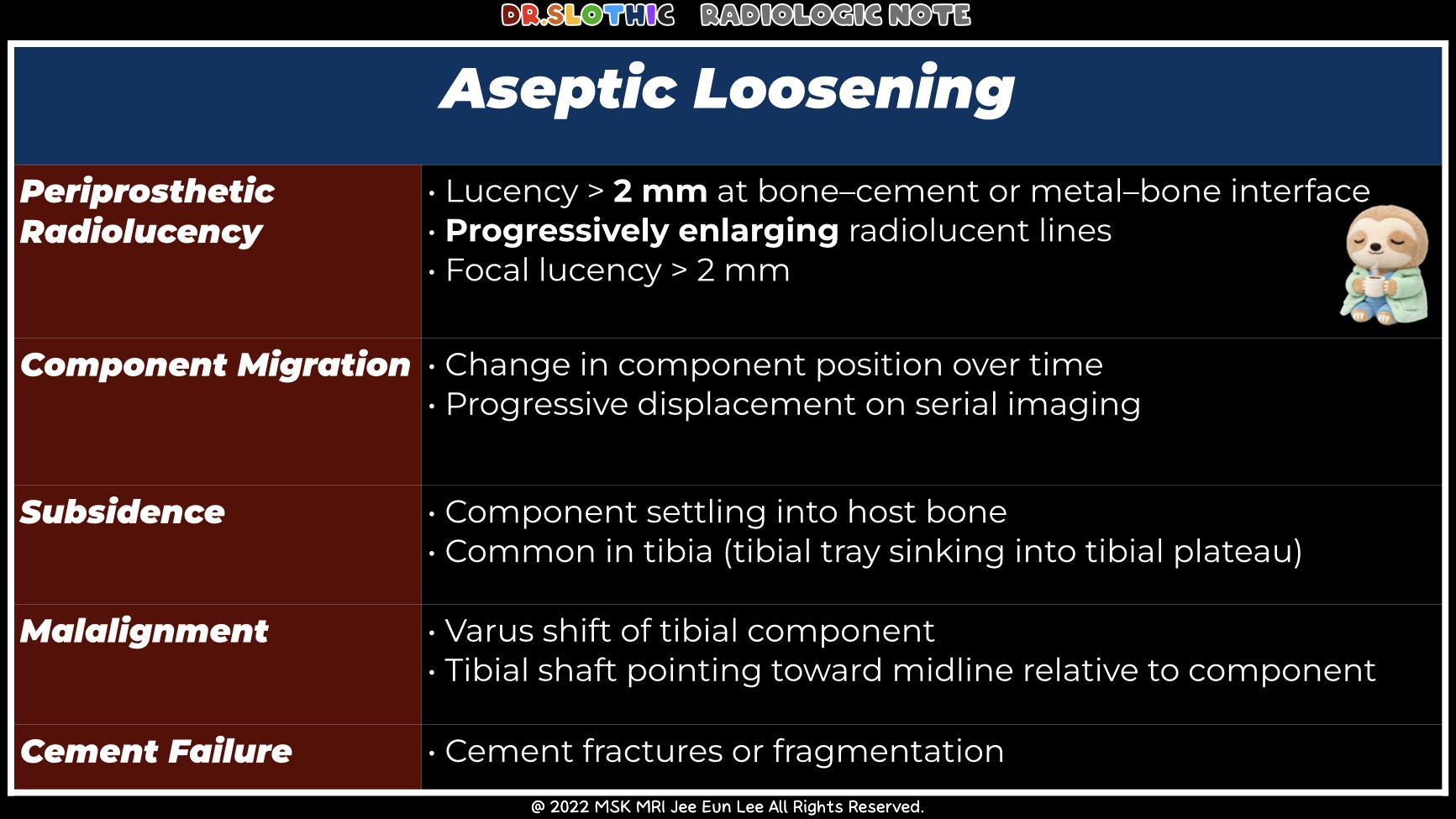
Key Radiographic Signs
- Periprosthetic radiolucency > 2 mm
- Component migration
- Stem–cortex contact
MRI Findings — Pathophysiologic Correlation
MRI does not replace radiographs, but adds critical diagnostic confidence.
Typical MRI Features
- Periprosthetic bone marrow edema–like signal
- Best appreciated on T1-weighted images for interface localization
Important Negative Findings
- No thin fibrous membrane
- No uniform low-signal interface line
- Helps differentiate loosening from other postoperative interface changes
Synovial and Joint Findings
- Joint effusion with villous / frond-like synovial proliferation
- Synovium shows low-to-intermediate signal intensity
- Consistent with wear-debris–related aseptic synovitis
- Not suggestive of infection
Advanced Imaging — When Needed
- CT with metal artifact reduction
- SPECT/CT
Key Take-Home Points
- Radiographs make the diagnosis
- MRI explains the mechanism
- Always exclude infection first, but imaging patterns can strongly favor aseptic loosening
#DrSlothic #SlothicRadiology #MSKRadiology
#AsepticLoosening #TotalKneeArthroplasty
#PostoperativeImaging #KneeMRI
#RevisionArthroplasty #OrthopedicRadiology
Visualizing MSK Radiology: A Practical Guide to Radiology Mastery
© 2022 MSK MRI Jee Eun Lee All Rights Reserved.
No unauthorized reproduction, redistribution, or use for AI training.

'✅ Dr. Slothic Notes' 카테고리의 다른 글
| 📌 The Gravid Hip: Subchondral Insufficiency Fracture of the Femoral Head (Pregnancy & Puerperium) (0) | 2026.01.18 |
|---|---|
| 📌 Radial Nerve Palsy After Crush Injury (0) | 2026.01.17 |
| 📌 Superior Capsular Reconstruction (SCR): Postoperative MRI (0) | 2026.01.15 |
| 📌 Plantar Fasciitis and Haglund’s Syndrome (0) | 2026.01.14 |
| 📌 CPPD Wrist on CT_ Diagnosis, TFCC Tear Prediction, and Ligament Anatomy (0) | 2026.01.13 |