https://youtube.com/shorts/DOp6Qss_ARA
 Coalition by MSKMRI JEE EUN LEE.pdf
6.67MB
Coalition by MSKMRI JEE EUN LEE.pdf
6.67MB

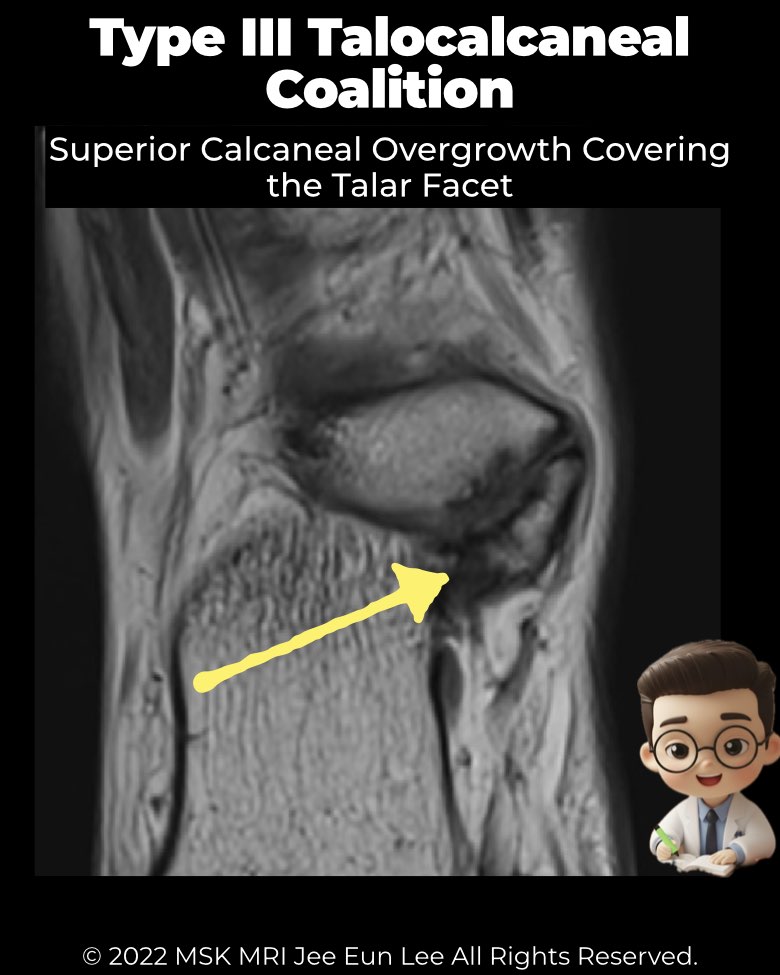
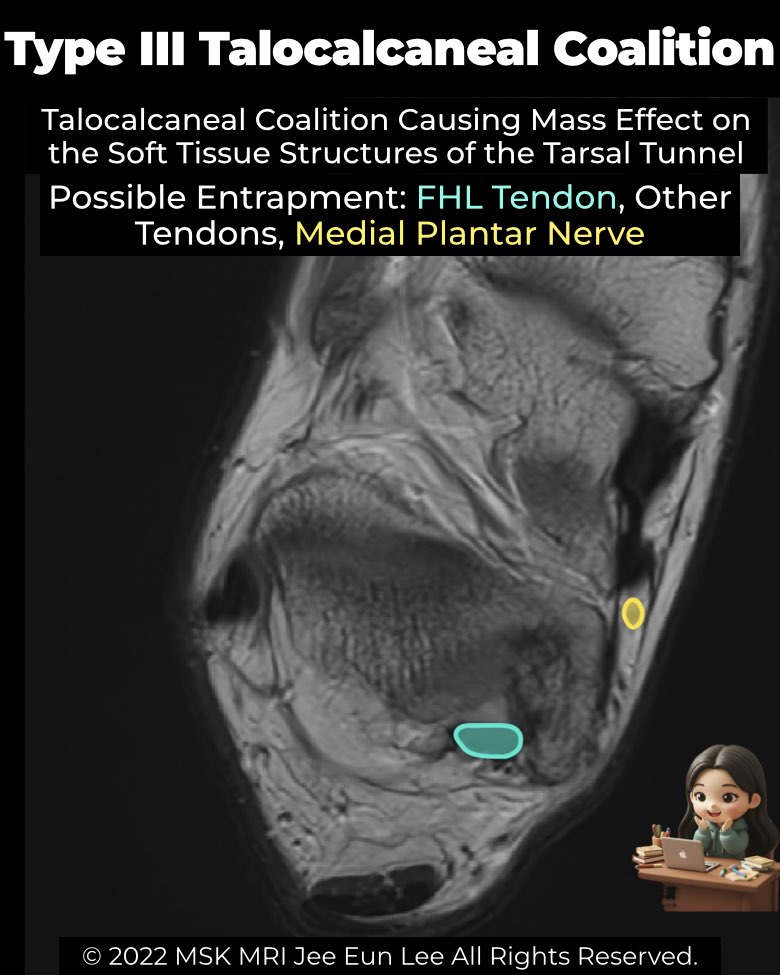

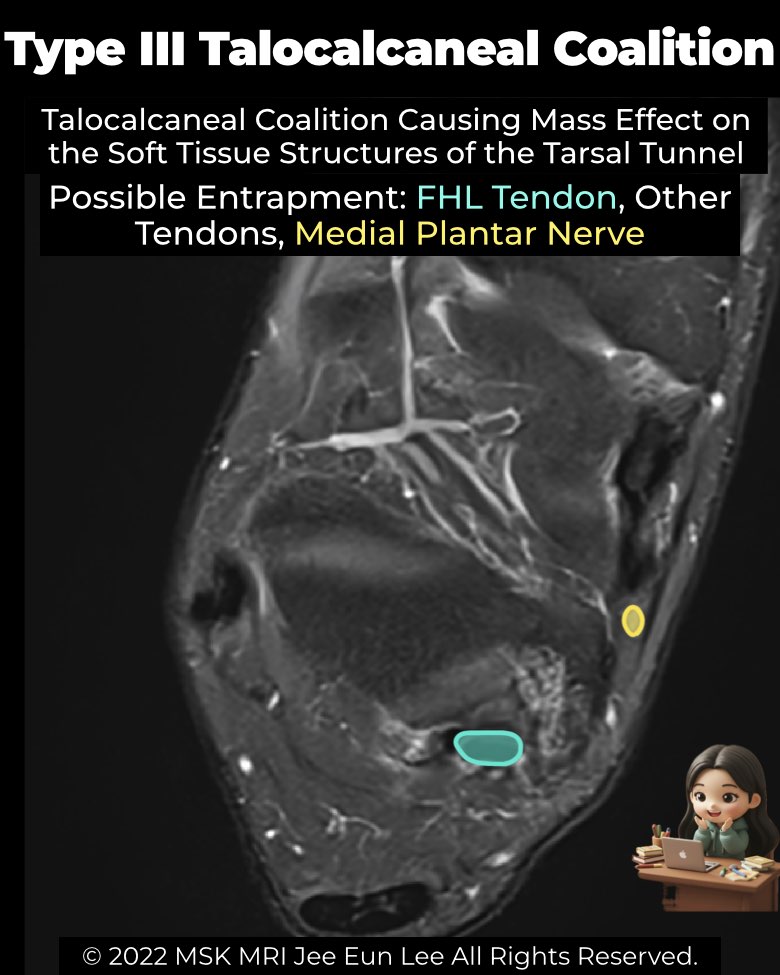
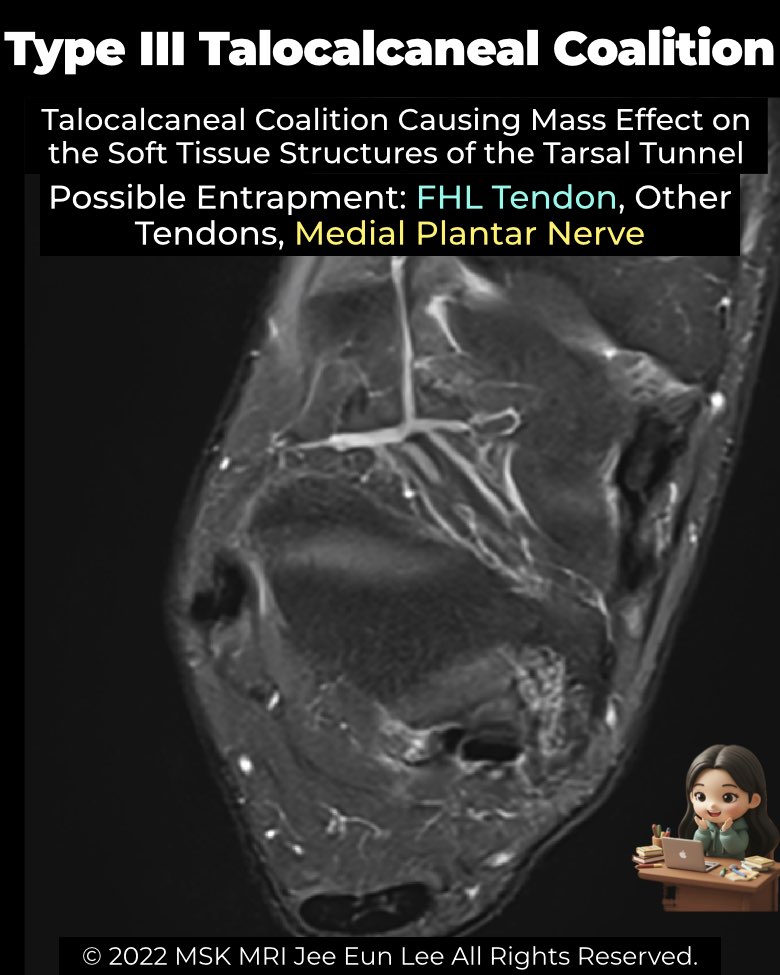


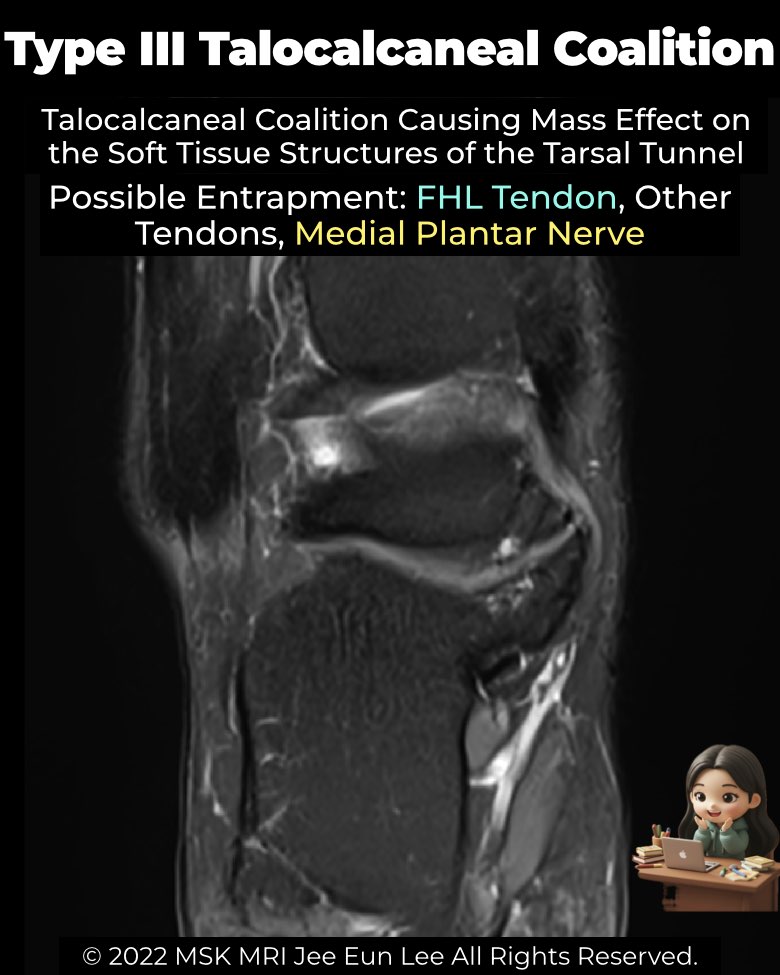
Nerve involvement (Tarsal Tunnel Syndrome)
- Mechanism: Bony excrescences or pseudarthrosis from non-osseous coalitions (esp. EA-PM type) encroach upon the tibial nerve branches.
- Medial plantar nerve (MPN) most vulnerable: runs along FHL and medial margins.
- MRI findings: nerve enlargement, T2 hyperintensity (neuritis), displacement, or compression by coalition or ganglion cyst.
- Clinical: paresthesia or sensory loss in MPN, LPN, or calcaneal nerve distribution.
Tendon involvement
- Flexor hallucis longus (FHL)
- Flexor digitorum longus (FDL)
- Posterior tibial tendon (PTT)
Key radiology takeaways
- Mass effect is a frequent secondary complication of talocalcaneal coalition, not just an anatomic curiosity.
- MRI should evaluate for:
- Recognition is crucial for explaining symptoms (TTS, tendon pain) and guiding surgical planning.
#Radiology, #MSKMRI, #TalocalcanealCoalition, #TarsalTunnel, #FHLtendon, #FDLtendon, #NerveEntrapment, #FootMRI, #OrthopedicImaging, #RadiologyEducation
Visualizing MSK Radiology: A Practical Guide to Radiology Mastery
© 2022 MSK MRI Jee Eun Lee All Rights Reserved.
No unauthorized reproduction, redistribution, or use for AI training.