https://youtube.com/shorts/6xu516ROzyc
How Superior Glenosphere Migration Creates Direct Compression and Tension at the Coracoid Base
Why This Matters
Coracoid fractures after RTSA are rare, often radiographically occult, and frequently misdiagnosed.
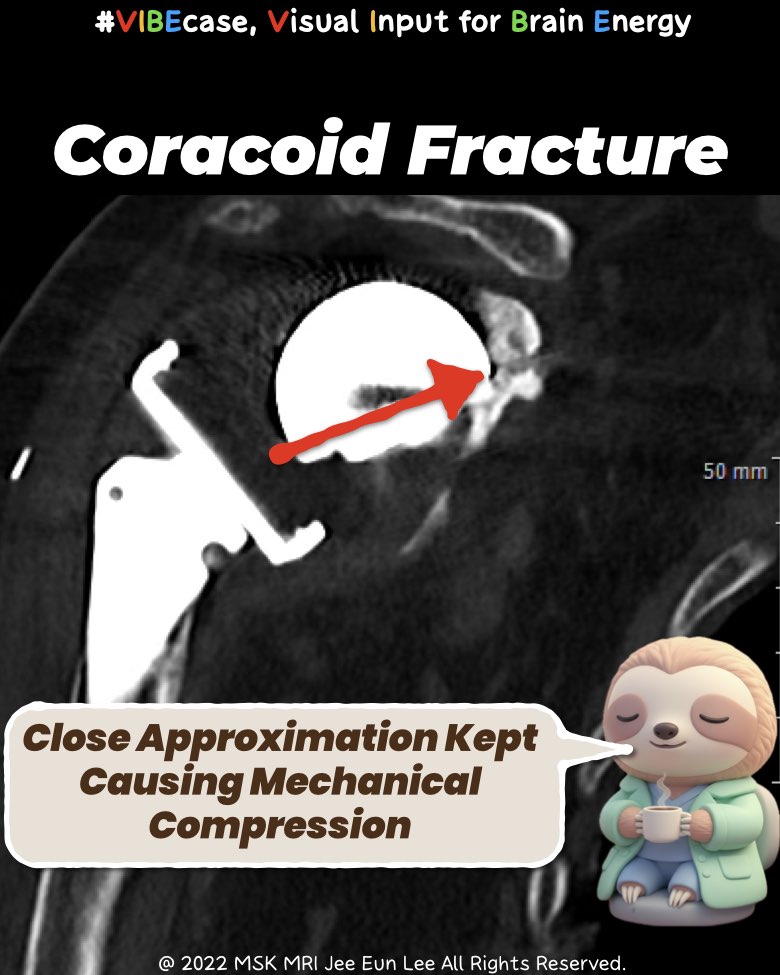
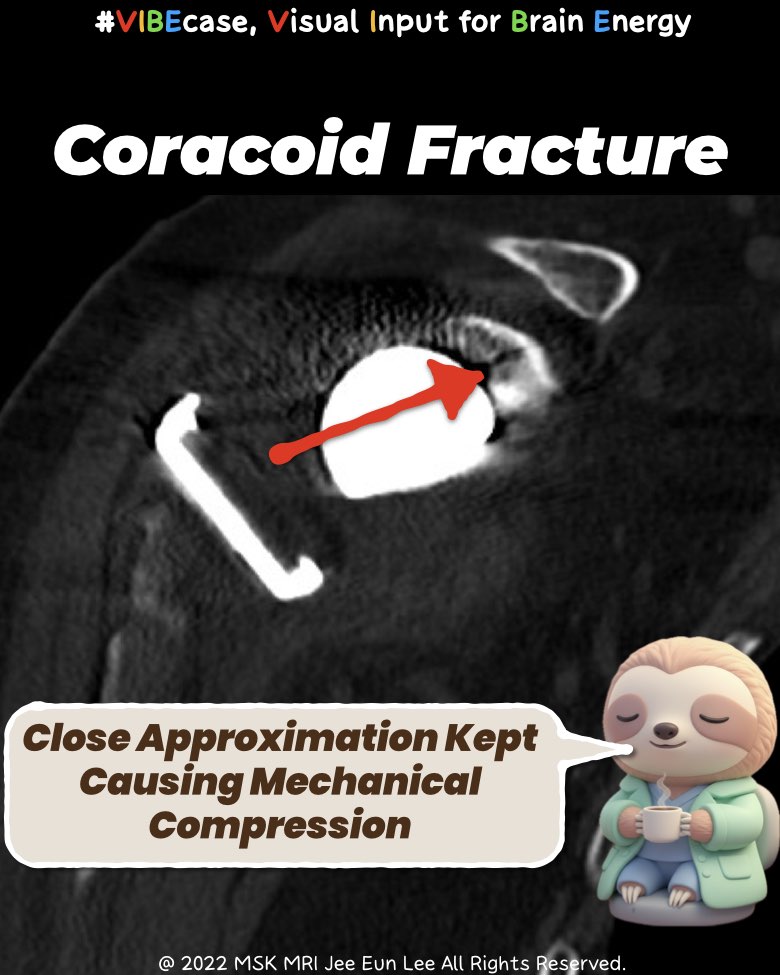
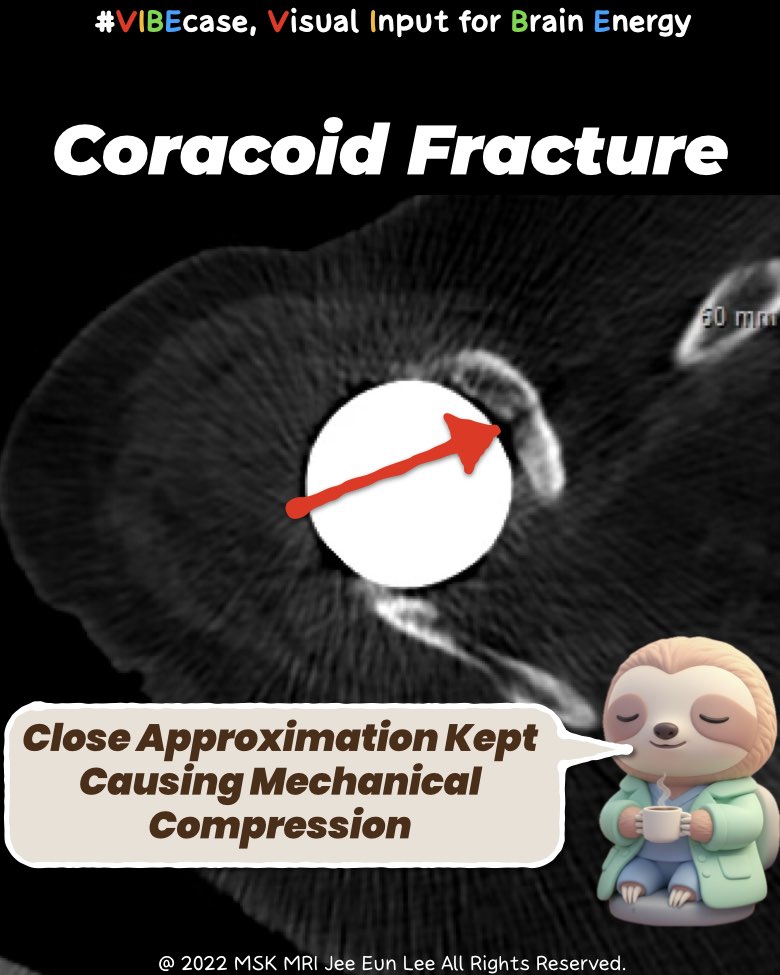
A key mechanism may be under-recognized: superior migration of the glenosphere, mechanically narrowing the coracoid–glenosphere distance, creating both direct compression and increased conjoint tendon tension.
Mechanism Overview
1. Superior Migration → Loss of Clearance
When the glenosphere migrates superiorly (often due to baseplate loosening or tilt), the coracoid–glenosphere space becomes abnormally narrow.
This sets the stage for micro-impingement–like contact between the glenosphere and the coracoid base.
2. Direct Mechanical Compression
The reduced distance produces repetitive mechanical compression against the coracoid base during shoulder motion, especially adduction and internal rotation.
3. Increased Conjoint Tendon Tension
Superior migration also alters humeral position, effectively increasing the traction vector of the conjoint tendon on its coracoid origin.
4. Combined Stress → Fatigue Fracture
Compression + traction forces act together, creating a high-risk stress environment at the coracoid base, leading to a nondisplaced fracture.
How It Appears on Imaging
Radiographs
Often normal; coracoid fracture lines rarely visible.
But superior glenosphere migration or progressive baseplate tilt should raise suspicion.
CT (Most Diagnostic)
- Loss of coracoid–glenosphere distance
- Subtle cortical lucency or nondisplaced fracture at the coracoid base
- Occasional proximity suggesting impingement contact
- Helps confirm baseplate loosening contributing to migration
Clinical Clue
New anterior shoulder pain after RTSA + superior migration on imaging
→ Always consider coracoid stress fracture.
Core Message
Superior migration does more than increase tendon traction—it physically brings the glenosphere too close to the coracoid.
That excessive approximation creates repeated compression, layered on top of increased conjoint tendon tension, ultimately producing a stress fracture.
#RTSA, #ShoulderImaging, #CoracoidFracture, #GlenosphereMigration, #Orthopaedics, #Radiology, #MSKRadiology, #ShoulderArthroplasty, #CTImaging, #PostoperativeShoulder #Vibecase,
Visualizing MSK Radiology: A Practical Guide to Radiology Mastery
© 2022 MSK MRI Jee Eun Lee All Rights Reserved.
No unauthorized reproduction, redistribution, or use for AI training.


'✅ Dr. Slothic Notes' 카테고리의 다른 글
| 📌 Insufficiency Fractures of the Unresurfaced Patella After TKA (0) | 2025.12.06 |
|---|---|
| 📌 CT-Negative, MRI-Positive: The Cancellous Stress Fracture Pattern You Should Not Miss (0) | 2025.12.03 |
| 📌 RTSA Glenoid Complications: The Essentials (0) | 2025.12.01 |
| 📌 When the MPFL Tears Without Patellar Dislocation (0) | 2025.11.23 |
| 📌 MPFL: It’s Not One Ligament. (0) | 2025.11.23 |