https://youtube.com/shorts/8ApMUe7aktc
Why This Matters
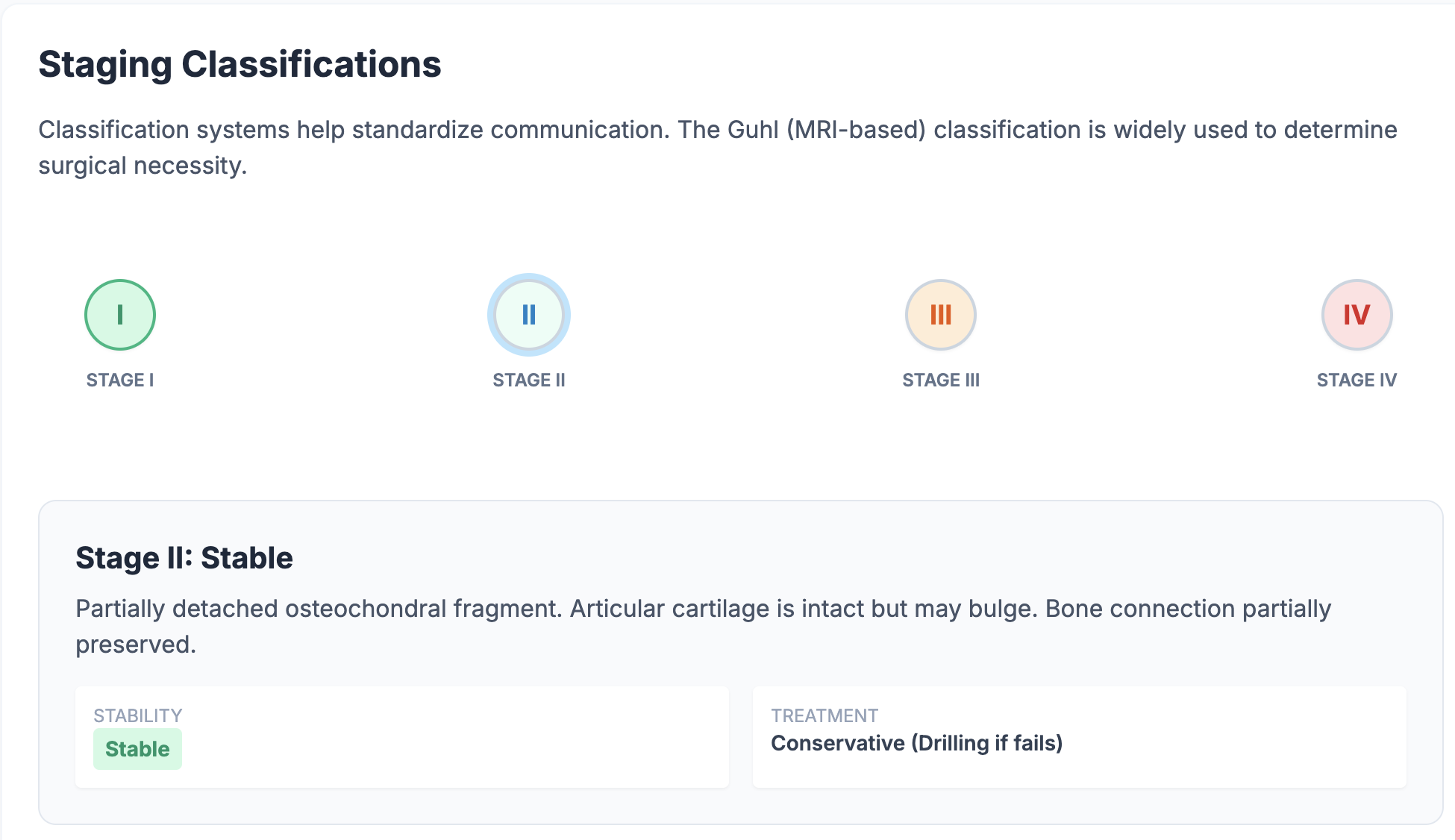
In adult osteochondritis dissecans, instability is not defined by fragment displacement.
It is a biological problem, and MRI allows us to recognize instability before mechanical failure occurs.
Core Principle
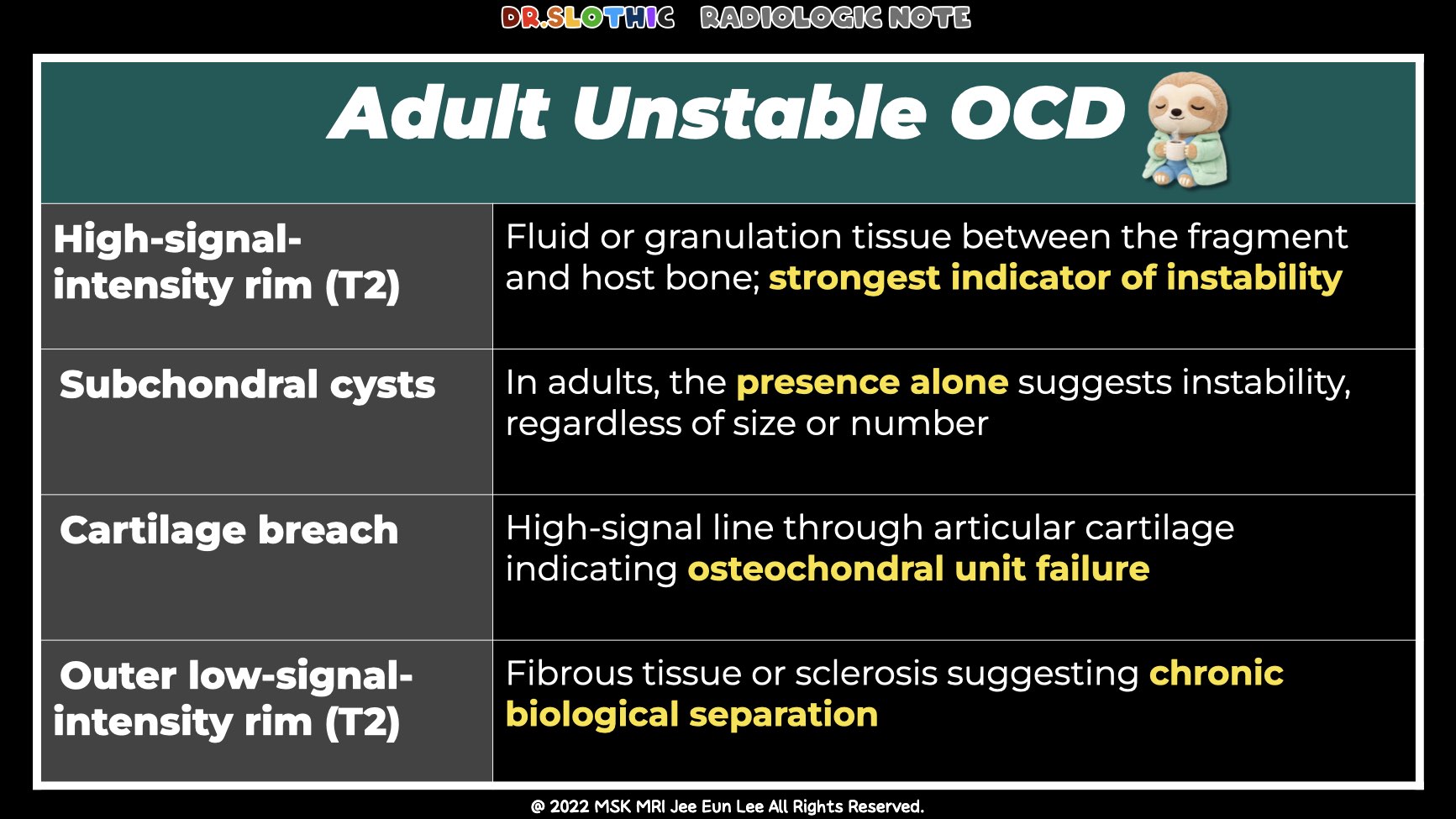
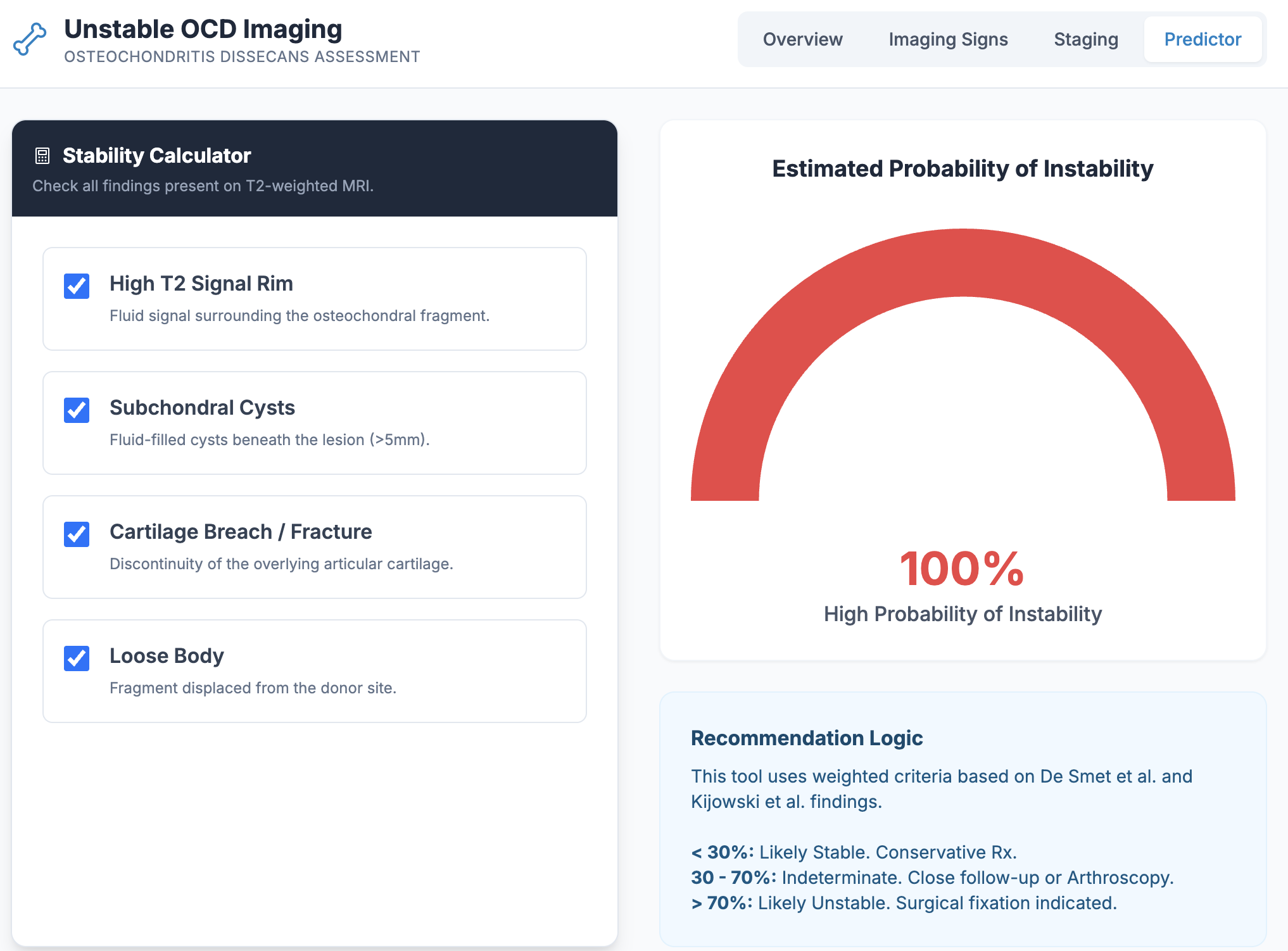
In adults, even ONE MRI instability sign = Unstable OCD
Waiting for displacement means the biological window for healing is already gone.
Key MRI Findings of Unstable OCD
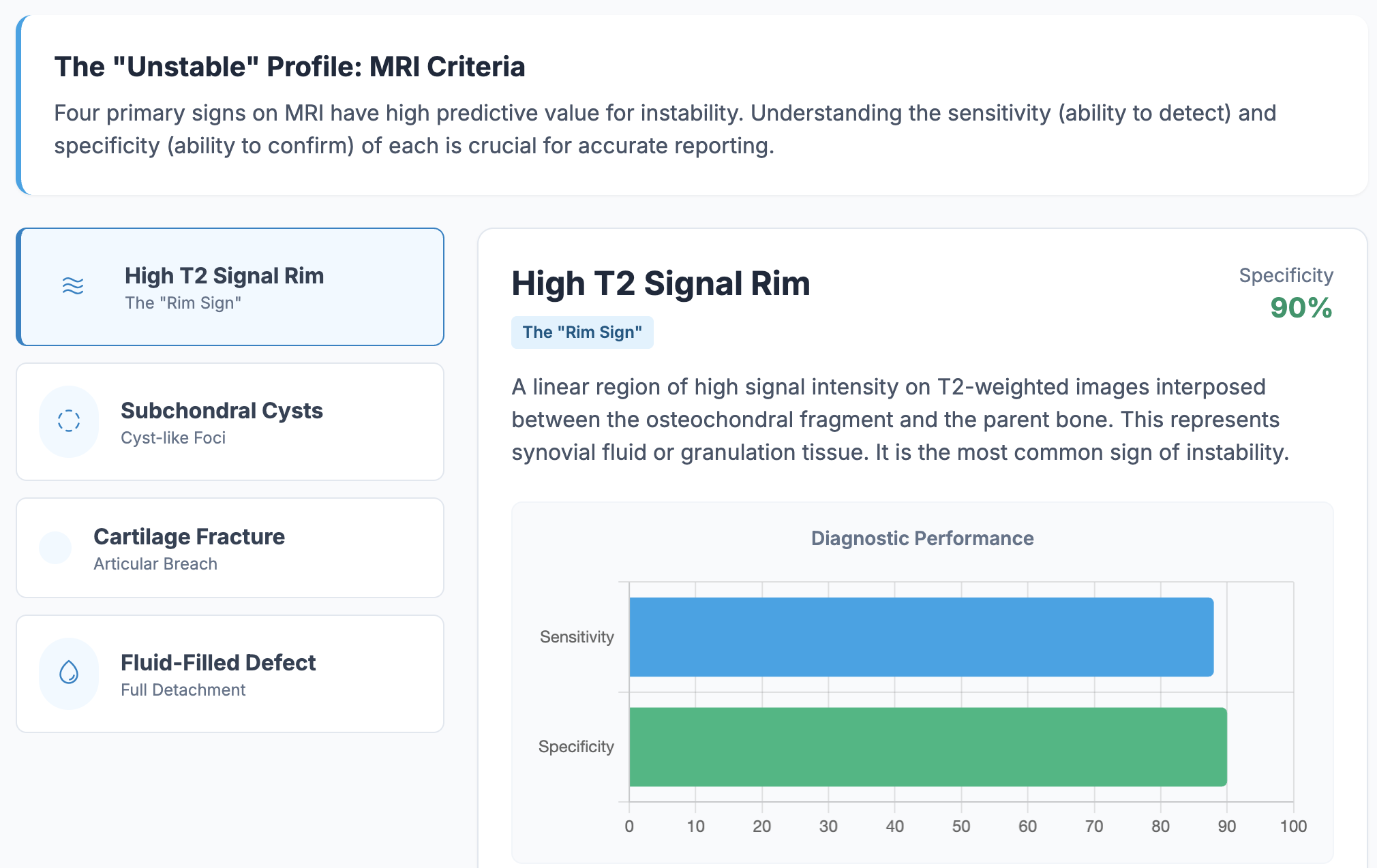
High-signal-intensity rim (T2)
• Fluid or granulation tissue at the fragment–host bone interface
• Strongest and most reliable predictor of instability
Subchondral cystic changes
• Juvenile OCD: size and number matter
• Adult OCD: presence alone is concerning
Cartilage breach
• High-signal line extending through the articular cartilage
• Indicates failure of the entire osteochondral unit
• Biological healing is extremely unlikely
Outer low-signal-intensity rim (T2)
• Fibrous tissue or sclerosis at the interface
• Reflects chronic biological separation, even if the fragment looks in place
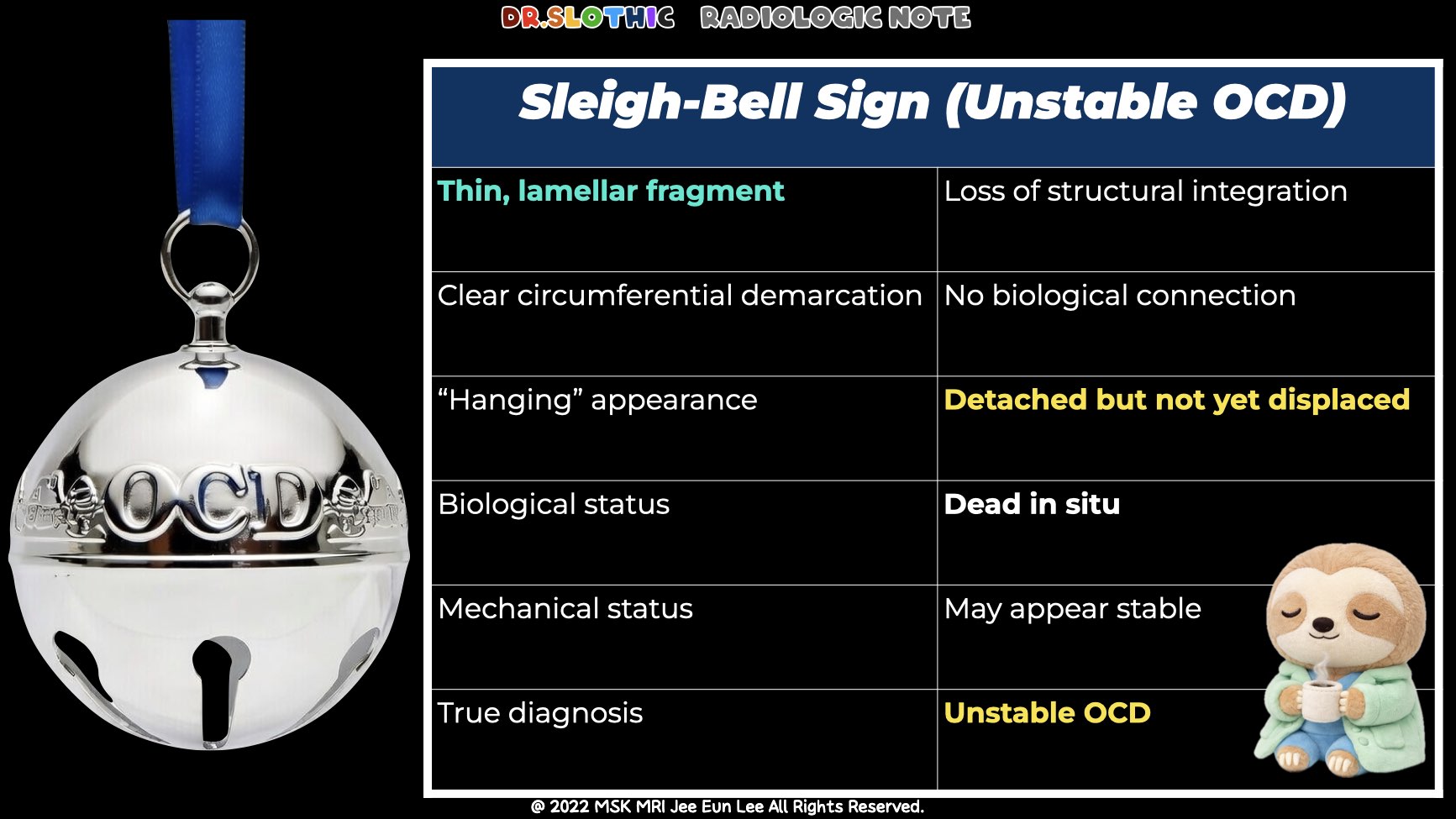
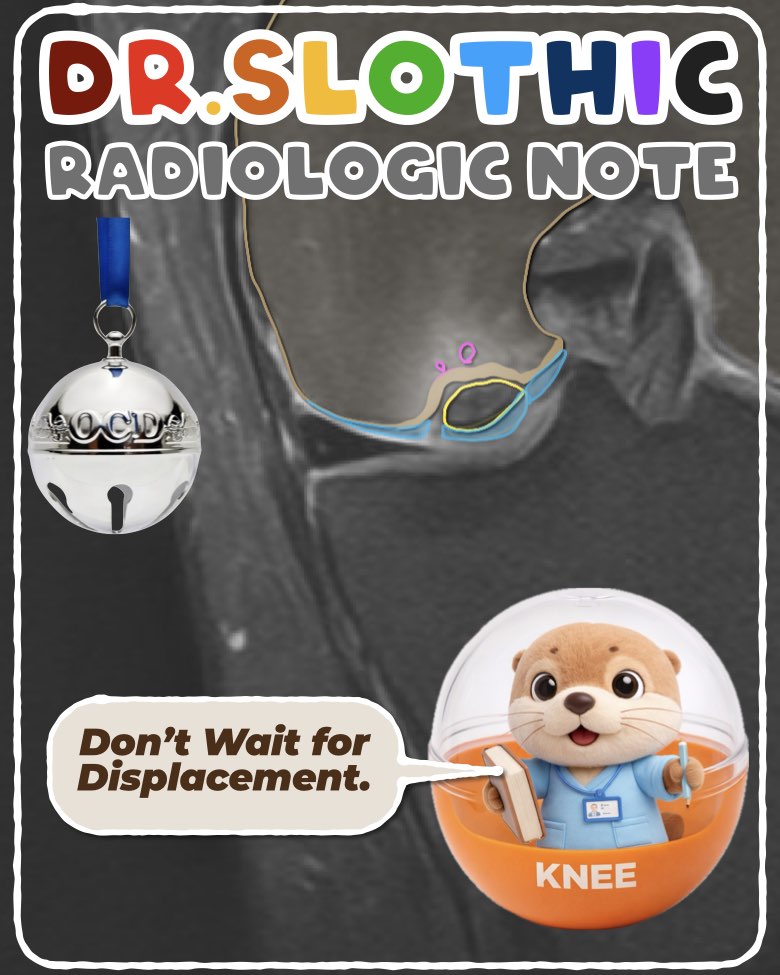
☑️ The Sleigh-Bell Sign
• Thin, lamellar osteochondral fragment
• Clear circumferential demarcation
• Appears to “hang” from the host bone
This is not a fragment that is loosening.
It is already biologically detached, even without displacement.
Pathologically, the fragment is dead in situ—
mechanically present, but without blood supply or healing potential.
Take-Home Message
Not displaced ≠ stable
When MRI shows instability in adult OCD,
the ending has already been written.
#DrSlothic #SlothicRadiology #UnstableOCD #OsteochondritisDissecans #KneeMRI #MSKRadiology #OrthopedicImaging #SportsRadiology #RadiologyEducation #MRITeaching
Visualizing MSK Radiology: A Practical Guide to Radiology Mastery
© 2022 MSK MRI Jee Eun Lee All Rights Reserved.
No unauthorized reproduction, redistribution, or use for AI training.





'✅ Dr. Slothic Notes' 카테고리의 다른 글
| 📌 Bennett Lesion and Posterosuperior Internal Impingement: A Common Pitfall (0) | 2026.01.20 |
|---|---|
| 📌 Labral Calcification: The MRI Low-Signal Trap (0) | 2026.01.18 |
| 📌 The Gravid Hip: Subchondral Insufficiency Fracture of the Femoral Head (Pregnancy & Puerperium) (0) | 2026.01.18 |
| 📌 Radial Nerve Palsy After Crush Injury (0) | 2026.01.17 |
| 📌 Aseptic Loosening After Total Knee Arthroplasty (0) | 2026.01.16 |